Choosing the Right 3D Mason Jar Gift Tags Bundle Paper Tags for Your Crafting Projects
For crafters and small business owners, the presentation of a gift is often just as important as the item inside. When it comes to homemade preserves, baked goods, or party favors, mason jars remain a timeless vessel. However, elevating these jars from simple containers to polished gifts requires thoughtful detailing. This is where a 3D Mason Jar Gift Tags Bundle Paper Tags becomes an essential resource. Unlike standard flat labels, these digital assets are designed to add depth and texture, transforming a basic jar into a professional-looking product. Understanding the nuances of these bundles, their file formats, and how they compare to other labeling methods can help you decide if this approach fits your specific workflow and creative goals.
Defining the 3D Aesthetic in Digital Cut Files
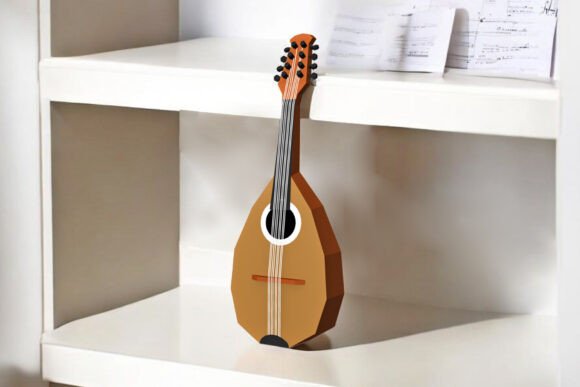
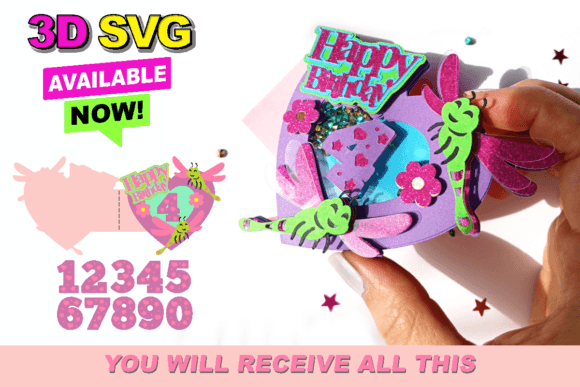
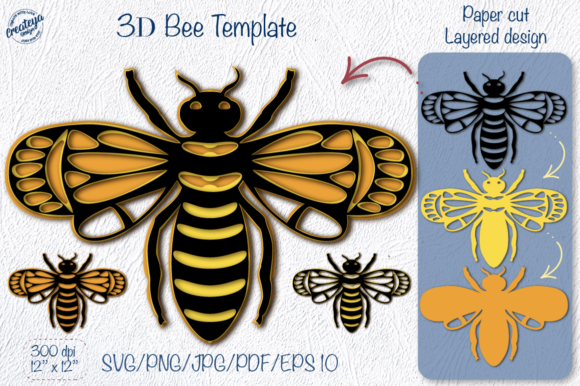
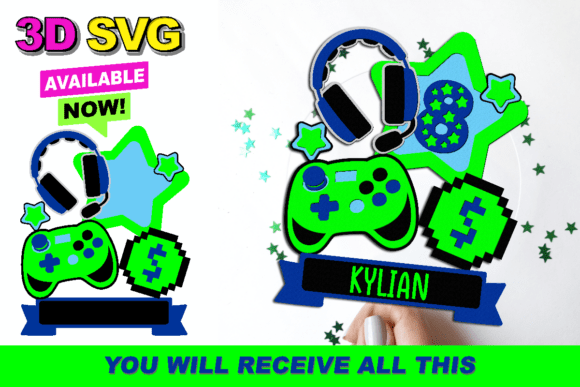
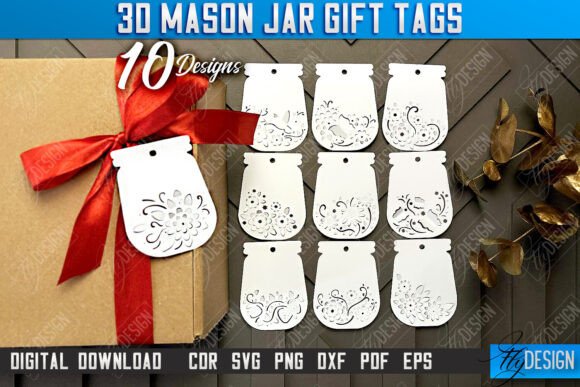
The term "3D" in the context of digital cut files does not refer to stereoscopic imagery or holographic effects. Instead, it describes a layering technique achieved through physical assembly. A 3D Mason Jar Gift Tags Bundle Paper Tags typically includes multiple layers of design elements—such as borders, central motifs, and text—that are cut from different colors or textures of cardstock. When stacked using adhesive foam dots or glue, these layers create shadows and dimension that flat printing cannot replicate.
This approach distinguishes itself from traditional printable labels. While printable sheets offer convenience for high-volume, single-color runs, they often lack the tactile quality of layered paper. The 3D bundle approach allows for greater customization; you can mix metallic foils with matte cardstock or use patterned papers for specific layers. This flexibility makes it particularly suitable for holiday gifts, wedding favors, and boutique product lines where perceived value is heightened by handcrafted details.
Evaluating File Formats and Machine Compatibility
One of the most critical factors when selecting a digital bundle is file compatibility with your cutting machine. A comprehensive 3D Mason Jar Gift Tags Bundle Paper Tags usually provides a zip archive containing a variety of formats to ensure broad usability. Typically, you will find SVG, EPS, PNG, PDF, and DXF files included. Each format serves a distinct purpose depending on your hardware and software ecosystem.
- SVG (Scalable Vector Graphics): This is the industry standard for users of Cricut Design Space and Silhouette Studio. It preserves vector paths, allowing for infinite scaling without loss of quality. Most modern cutting machines prefer this format for clean cuts.
- DXF (Drawing Exchange Format): Often used as a reliable alternative for older software versions or specific industrial plotters. Notably, if you are using Lightburn software, which is popular among laser cutter enthusiasts, SVG files can sometimes result in distorted dimensions. In such cases, the DXF format is strongly recommended to maintain geometric accuracy.
- PNG (Portable Network Graphics): These are raster images with transparent backgrounds. They are ideal for sublimation printing or for users who do not own cutting machines but wish to print the tags on a home printer and cut them manually.
- EPS and PDF: These are versatile vector formats compatible with professional design software like Adobe Illustrator or CorelDRAW, offering precise control over node editing before sending to a cutter.
It is vital to verify that your specific machine and software version support these formats before purchasing. While most bundles are designed to be universal, checking compatibility prevents frustration during the production phase. If you require a specific variation, such as a different color scheme for PNGs or an alternate file type, many creators are willing to accommodate requests via direct message.
Comparative Analysis: Layered Tags vs. Alternative Labeling Methods
When deciding on a labeling strategy, it is helpful to weigh the 3D Mason Jar Gift Tags Bundle Paper Tags against other common alternatives. Each method has tradeoffs regarding time, cost, and visual impact.
Layered Paper Tags vs. Printable Vinyl
Printable vinyl is a strong competitor for those prioritizing speed. You can print hundreds of labels on a single sheet and weed them quickly. However, printable vinyl lacks the depth of layered cardstock. Furthermore, vinyl can peel over time, especially in humid environments like a kitchen or bathroom where mason jars are often stored. Paper tags, when constructed with quality cardstock and proper adhesive, offer a more durable and premium feel, though they require more assembly time per unit.
Layered Paper Tags vs. Pre-Made Stickers
Purchasing pre-made stickers eliminates the need for cutting machines entirely. This is an excellent option for beginners or those without equipment. The downside is a lack of customization. With a digital bundle, you control the size, color palette, and materials. If you are creating a brand identity, the ability to match your tag colors exactly to your packaging is a significant advantage that pre-made options rarely offer.
Layered Paper Tags vs. Laser-Engraved Wood
Wooden tags provide a rustic aesthetic that pairs well with mason jars. However, they are generally more expensive and limited in color unless painted. Paper tags offer a wider range of color possibilities and are significantly lighter, reducing shipping costs if you are selling products online. Additionally, paper allows for intricate details that might be too fragile for thin wood veneers.
Practical Considerations and Best-Fit Scenarios
Adopting a 3D Mason Jar Gift Tags Bundle Paper Tags workflow is not suitable for every scenario. It shines brightest in situations where quality and uniqueness outweigh the need for mass-production speed. For example, if you are preparing holiday gifts for friends and family, the extra time spent assembling layered tags adds a personal touch that recipients appreciate. Similarly, for small-batch artisans selling at local craft fairs or on Etsy, the elevated look of 3D tags can justify a higher price point.
Conversely, if you are fulfilling large corporate orders or need to label hundreds of jars in a single day, the manual assembly required for 3D tags may become a bottleneck. In high-volume scenarios, a hybrid approach might be effective: using the digital files to create a master template for die-cutting services, or reserving the 3D treatment for premium product lines while using simpler flat labels for standard items.
Another practical consideration is storage and organization. Since these bundles come as digital downloads, they require no physical storage space until printed. However, managing the multiple layers for each design requires an organized system for sorted cardstock scraps. Crafters should evaluate their workspace capacity before committing to a multi-layer production style.
Making an Informed Decision
Ultimately, the choice to utilize a 3D Mason Jar Gift Tags Bundle Paper Tags depends on your specific crafting objectives, available tools, and target audience. If you value texture, customization, and a handcrafted aesthetic, these digital bundles provide a robust foundation. The inclusion of multiple file formats ensures that whether you use a Cricut, Silhouette, laser cutter, or standard printer, there is a viable path to execution.
Before finalizing your decision, consider testing a single design from a bundle to gauge the assembly time and material usage. Pay attention to how different paper weights affect the final dimension; heavier cardstock creates more pronounced shadows but may be harder to adhere neatly. Remember that technical issues, such as dimension distortion in Lightburn, can often be resolved simply by switching from SVG to DXF files.
By understanding the strengths and limitations of 3D paper tagging compared to other methods, you can select the resource that best aligns with your creative vision. Whether for personal gifting or commercial ventures, the right tag design bridges the gap between a simple jar and a memorable gift. For those interested in exploring further variations or needing specific adjustments to file types, reaching out to the creator directly is often the best course of action to ensure your project proceeds smoothly.