Crafting Magic: The Tiny Child with Christmas Tree 3D Pop Up for Makers and Storytellers
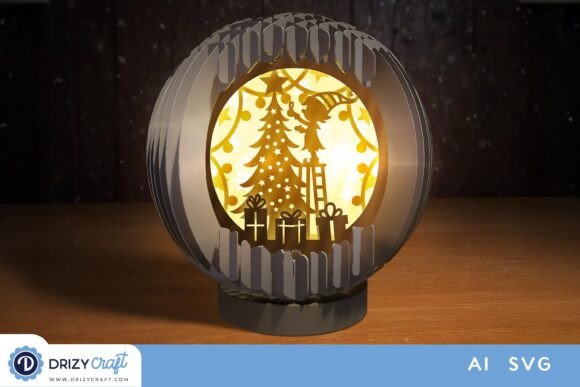
There is a specific kind of satisfaction that comes from turning a flat sheet of paper into something that leaps off the page. It's not just about cutting shapes; it's about engineering a moment of surprise. The Tiny Child with Christmas Tree 3D Pop Up design captures this magic perfectly. At first glance, it might look like a standard holiday illustration, but the folded version hides a layered depth that transforms into a charming scene when opened. For creators, hobbyists, and small business owners looking to add a personal touch to their holiday season, this digital asset offers a bridge between traditional papercraft and modern digital convenience.
This isn't just a clipart image you paste into a document. It is a functional paper art design intended to be cut, folded, and assembled. When you download the ZIP file, you aren't just getting a picture; you are getting the blueprints for a tangible object. The inclusion of both AI and SVG formats means the design is ready for whatever workflow you prefer. If you own a Silhouette or Cricut, the SVG file allows you to send the design straight to your machine for precise cuts. If you are more old-school or perhaps working on a project with students where hand skills are the goal, you can print the template and use an art knife or scissors. The flexibility here is key because it respects the user's available tools rather than demanding expensive equipment.
Bringing Depth to Holiday Greetings
The most immediate application for the Tiny Child with Christmas Tree 3D Pop Up Folded design is in personal gifting. We live in an era where digital cards are instant but often forgettable. A physical card that requires the recipient to interact with it—pulling tabs or opening flaps to reveal the 3D scene—creates a memory. Imagine sending this to a grandparent who lives far away or a friend who appreciates handmade items. The act of assembling it yourself adds a layer of care that store-bought cards simply cannot match.
When you assemble these, you will need glue or double-sided tape. This small step is where the magic happens. As you adhere the layers, the flat image gains dimension. The "tiny child" becomes a character standing in front of the tree, not just drawing on paper. For bloggers and content creators, documenting this assembly process can be powerful content. A time-lapse video of the folding process or a tutorial on how to achieve crisp folds can engage an audience looking for DIY inspiration during the busy holiday rush.
Commercial and Small Business Opportunities
For entrepreneurs and small business owners, particularly those selling on platforms like Etsy or at local craft fairs, this design represents a low-overhead product opportunity. Because the file is scalable, you can adjust the size to fit various products without losing quality, provided you maintain the aspect ratio. You could create a line of miniature ornaments by scaling the design down, using heavier cardstock, and adding a ribbon loop. Alternatively, scale it up to create table centerpieces for holiday parties or events.
One creative twist for commercial sellers is the addition of lighting. The prompt suggests adding LEDs for a special effect, and this is a game-changer for perceived value. A small, battery-operated tea light or a tiny LED strip tucked behind the paper layers can make the tree glow, turning a simple paper craft into a nightlight or a festive shelf decor piece. This modification appeals to customers looking for unique home decor that stands out from mass-produced plastic decorations. However, if you plan to sell finished goods made from this design, always check the specific licensing terms of the creator to ensure commercial use is permitted.
Educational and Therapeutic Applications
Educators and therapists will find significant value in the structural nature of this project. For teachers, this is an excellent STEM-adjacent activity. It teaches spatial reasoning, fine motor skills, and the basics of engineering through paper. Students have to understand how the folds interact to create the pop-up effect. If a fold is creased the wrong way, the mechanism won't work. This trial-and-error process is a valuable lesson in patience and precision.
In occupational therapy settings, the assembly of the Tiny Child with Christmas Tree 3D Pop Up can help individuals regain dexterity or improve hand-eye coordination. The requirement to use an art knife (under supervision) or manipulate small pieces of tape demands focus and steady hands. Furthermore, the seasonal theme provides a comforting, familiar context that can make therapy sessions feel less clinical and more like a fun holiday activity. The final result gives the participant a sense of accomplishment, holding a 3D object they built from scratch.
Practical Considerations Before You Start
Before you dive into cutting and gluing, there are a few practical realities to consider to ensure your project succeeds. First, paper choice matters immensely. While printer paper works for prototypes, it is often too flimsy for a sturdy 3D structure that needs to hold its shape. Cardstock, typically between 65lb and 80lb cover weight, is usually the sweet spot. It holds a crisp fold but isn't so thick that it resists bending at the hinge points.
Secondly, pay attention to the note regarding color variation. The images you see on your screen are for preview purposes. The final product's appearance will depend heavily on the paper color you choose and your lighting conditions. A cream-colored cardstock will give a vintage, warm feel, while bright white will make the colors pop with a modern aesthetic. This variability is actually a feature, not a bug, allowing you to customize the mood of the piece. If you are making a set of ten for party favors, ensure you buy paper from the same batch to avoid slight shade differences.
Resizing is another technical point to master. SVG files are vector-based, meaning they can be scaled infinitely without pixelation. However, the instruction to keep the same aspect ratio is critical. If you stretch the image horizontally or vertically to fit a specific space, the proportions of the child and the tree will distort, and the folding mechanics may break. The pop-up relies on specific geometric relationships; altering the width independently of the height can prevent the layers from aligning correctly when folded.
Why This Design Resonates
Ultimately, the appeal of the Tiny Child with Christmas Tree 3D Pop Up Folded lies in its blend of nostalgia and interactivity. In a world dominated by screens, there is a growing hunger for tactile experiences. People want to hold things, build things, and give things that required effort. Whether you are a marketer looking for a unique direct-mail campaign element, a parent wanting a rainy-day activity, or a designer seeking a fresh component for a scrapbook, this file provides a versatile foundation.
The process forces you to slow down. You cannot rush the gluing or the folding. In doing so, it becomes a mindful exercise. The end result is a miniature stage set featuring a child and a tree, frozen in a moment of holiday joy. It serves as a reminder that sometimes the most impactful designs are the ones you can hold in the palm of your hand. By downloading and assembling this design, you aren't just making a craft; you are participating in a tradition of paper engineering that has delighted people for centuries, updated for the digital age.